By Adrian Leonard Mociulschi
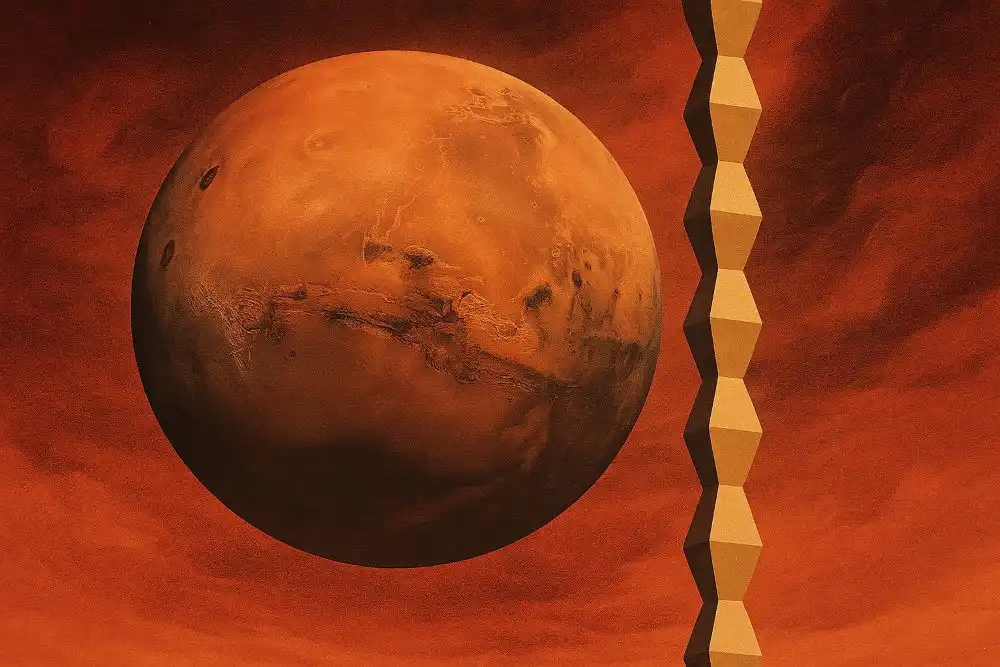
On a planet unsettled by tension and transition, March 2026 arrives with the strange clarity of a threshold. It is a moment in which the world feels stretched between urgencies—political, economic, existential—and yet, almost paradoxically, Romania marks the 150th anniversary of Constantin Brancusi’s birth. The contrast is sharp: the volatility of the present against the serenity of a sculptor who believed that form, once purified, could outlast the noise of any era.
Across Europe, cultural institutions open their doors in the midst of an atmosphere in which certainty has become a fragile currency. Cities unveil installations. Museums adjust their lights. Artists reposition themselves within a landscape in flux. And yet, beneath these gestures, one senses something subtler: a quiet insistence that meaning still matters, even now. Especially now.
But anniversaries, if they are to illuminate rather than merely commemorate, require us to return not only to the work—but to the path that forged it.
Brancusi’s ascent to the Hexagon was neither linear nor guaranteed. Born in 1876 in Hobița, a village that seemed, at the time, suspended outside of history, he carried with him the raw geometry of rural craftsmanship long before he had a language to describe it. He walked—literally walked—across half of Europe as a young man, crossing borders with the stubborn clarity of someone for whom destiny was not a metaphor but a direction.
Paris did not welcome him immediately; Paris rarely does. Yet once inside its gravitational field, he entered the studio of Auguste Rodin, the titan of his time. The encounter was transformative but not binding. Rodin’s monumental realism towered over the artistic landscape, but Brancusi sensed, with an intuition bordering on audacity, that staying too long in the master’s shadow would distort his own light. “Rien ne pousse à l’ombre des grands arbres,” he would later say—nothing grows in the shade of great trees. And so he left. Quietly, decisively, almost surgically.
That gesture—walking away from reverence toward essence—was the first true act of modernism in his career. It was the moment the Hexagon stopped being a geography and became a crucible.
Far from Paris and far beyond Earth itself, another geometry now flickers into view.
On Mars, a planet with no mythology and no memory of us, the Chinese rover Zhurong (祝融号 / Zhùróng Hào) has traced vast polygonal patterns beneath the red soil—shapes formed not by intention but by time. In the raw choreography of freeze and thaw, the universe sketches hexagons as if repeating a lesson written long before humanity arrived to interpret it.
These Martian patterns, indifferent and ancient, echo the same form that has threaded its way through Romanian folk craft for centuries—carved into wood, woven into textiles, passed down not as a technique but as an instinct. The hexagon, it seems, is not a cultural artifact. It is a universal pulse.
And then, inevitably, the line returns to Brancusi.
The Endless Column, with its ascending sequence of rhomboidal modules, is less a sculpture than a vertical film strip, a deliberate refusal to end the shot. It rises with the calm certainty of something that already knows its destination. Looking at it today, one feels not nostalgia but relevance—a reminder that verticality is a choice, not a given.
Of course, commemorations bring with them a predictable chorus. Some voices reach upward not through understanding, but by attaching themselves to what towers above them—forcing analogies, climbing metaphors, stretching interpretations in hopes that elevation might rub off. But history has shown, as it always does, that appropriation does not erode stature; it merely illuminates difference.
Brancusi’s work endures not because it invites imitation, but because it renders imitation irrelevant. His forms—pared down to their elemental logic—exist at a scale where epigones cannot follow. They can gesture, quote, approximate, even cling to his verticality as if proximity might confer altitude. But they remain, inevitably, outside the gravitational field of the original.
Across the long arc of culture, imitators flicker; Brancusi persists. His sculptures are not surfaces to be replicated, but principles to be understood—clarity over flourish, essence over gesture, inevitability over ambition. That is why his work stands while others echo. The genius defines the form; the epigones merely confirm it.
In that quiet asymmetry lies the perennity of Brancusi: a body of work that does not just survive comparison, but renders comparison obsolete—the same way a hexagon traced in Martian frost does not explain itself, yet feels instantly, uncannily familiar.
And perhaps this is the quiet truth Brancusi leaves us with, a century and a half after his birth: that civilization does not collapse when noise grows louder or when politics tremble, but when we forget how to look upward. The Endless Column is not a monument—it is an ultimatum. A reminder that the world can tilt, economies can fracture, algorithms can map our lives more quickly than we can understand them, but meaning still requires an act of ascent.
At a moment when everything presses us downward—into speed, into utility, into distraction—Brancusi’s vertical line stands like a refusal carved in light. It tells us that essence is not a luxury; it is our last defense against dissolution. And so the Column rises, module after module, past the limits of vision, past the borders of the Hexagon, past the static of the present moment—until it reaches the only place where imitation cannot follow: the infinite.
Keywords: Brancusi 150, Hexagon, Mars hexagons, Zhurong rover, Endless Column, universal geometry